
Pediatric Occupational Therapy in Falls Church & Herndon, VA
Pediatric occupational therapy helps children build the skills they need to participate in everyday activities, from getting dressed and using utensils to writing, playing, and interacting with others.
At Good Beginnings Therapy, our occupational therapists from Falls Church and Herndon locations work with children and families to address challenges with fine motor skills, sensory processing, self-care, play, and self-regulation.
Therapy activities are based on each child’s needs and goals, helping them build skills for participation at home, school, and in the community.
For example, occupational therapy may help a child practice holding a pencil, manage sensory sensitivities during daily routines, or develop the skills needed to dress and feed themselves.
Key takeaways
- Pediatric occupational therapy helps children develop independence in everyday activities.
- It supports fine and gross motor skills, including coordination, balance, writing, and self-feeding.
- Therapy helps children manage sensory processing challenges and regulate their emotions and behaviors.
- It develops self-care, play, social, and executive functioning skills.
- Early occupational therapy can help children overcome developmental challenges and participate more fully at home, school, and in the community.
What does pediatric occupational therapy treat or manage?

Pediatric occupational therapy is aimed at addressing a wide range of challenges that children may face in their daily lives. Here are some common areas that pediatric occupational therapy can treat or manage:
- Fine Motor Skills: Improving hand-eye coordination, dexterity, and control for activities such as writing, drawing, cutting, and using utensils.
- Gross Motor Skills: Occupational Therapists can assist with coordination and balance for activities like playing on the playground, jumping, and climbing.
- Sensory Processing: Helping children regulate their responses to sensory input (e.g., touch, sound, movement) to improve attention, behavior, and participation in activities.
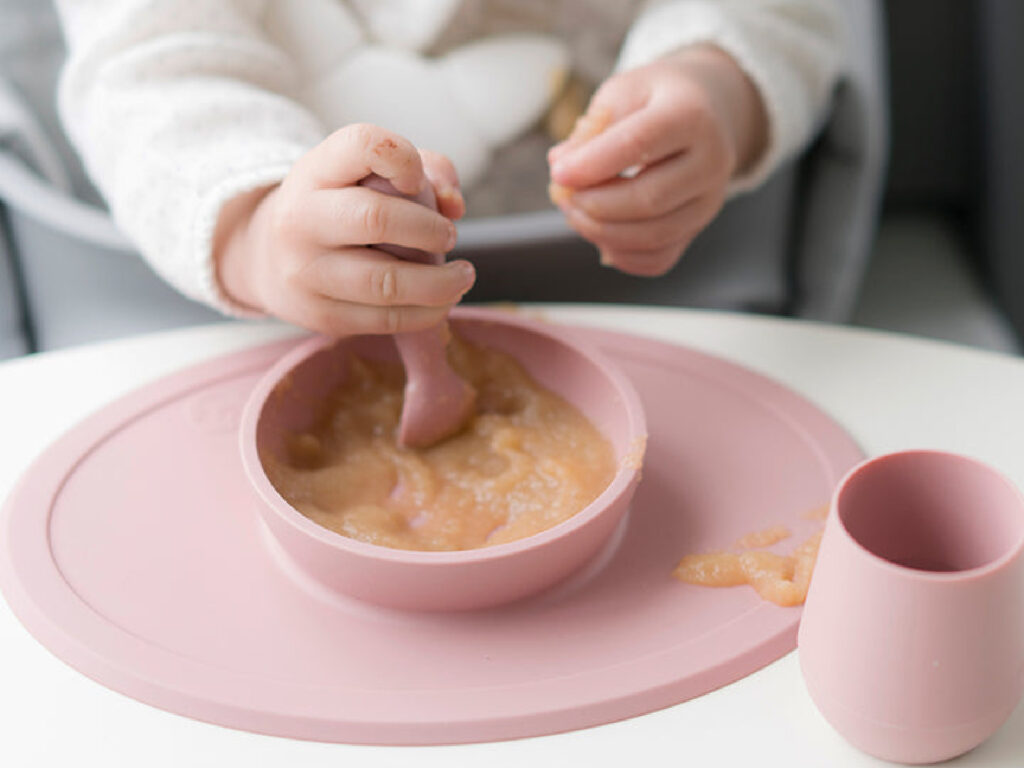
- Self-care Skills: Teaching children how to independently perform tasks such as dressing, grooming, feeding, and toileting.
- Play Skills: Encouraging engagement in appropriate play activities that promote social interaction, creativity, problem-solving, and motor development.
- Executive Functioning Skills: Developing abilities such as attention, memory, organization, planning, and problem-solving to support academic success and daily functioning.
- Emotional Regulation: Assisting children in managing emotions, coping with stress, and developing positive social interactions and relationships.
Overall, pediatric occupational therapy aims to improve children’s independence, participation, and overall quality of life in home, school, and community settings.
Signs Your Child May Benefit From Pediatric Occupational Therapy
These signs may indicate that an occupational therapy evaluation could be helpful. A qualified occupational therapist can assess your child’s needs and determine whether therapy is appropriate.
Fine motor and self-care challenges
- Difficulty using utensils or feeding independently.
- Trouble holding a pencil, drawing, or using scissors.
- Difficulty dressing, fastening buttons, or managing everyday tasks.
Sensory processing challenges
- Strong reactions to certain sounds, textures, or movement.
- Difficulty participating in routines because of sensory sensitivities.
- Challenges managing sensory input during play or daily activities.
Attention challenges
- Difficulty managing emotions or calming down.
- Trouble following directions or staying engaged in activities.
- Challenges with transitions between activities.
Developmental and participation concerns
- Delays in reaching developmental milestones.
- Difficulty participating in age-appropriate play.
- Challenges interacting with peers or participating in school routines.
Autism spectrum disorder (ASD): Children with ASD often benefit from occupational therapy to develop social skills, communication skills, sensory integration, and adaptive behaviors.
Attention Deficit Hyperactivity Disorder (ADHD): Children with ADHD may benefit from occupational therapy to improve attention, organization, self-regulation, and executive functioning skills.
Fine motor and self-care challenges
- Difficulty using utensils or feeding independently.
- Trouble holding a pencil, drawing, or using scissors.
- Difficulty dressing, fastening buttons, or managing everyday tasks.
Sensory processing challenges
- Strong reactions to certain sounds, textures, or movement.
- Difficulty participating in routines because of sensory sensitivities.
- Challenges managing sensory input during play or daily activities.
Attention challenges
- Difficulty managing emotions or calming down.
- Trouble following directions or staying engaged in activities.
- Challenges with transitions between activities.
Developmental and participation concerns
- Delays in reaching developmental milestones.
- Difficulty participating in age-appropriate play.
- Challenges interacting with peers or participating in school routines.
Autism spectrum disorder (ASD): Children with ASD often benefit from occupational therapy to develop social skills, communication skills, sensory integration, and adaptive behaviors.
Attention Deficit Hyperactivity Disorder (ADHD): Children with ADHD may benefit from occupational therapy to improve attention, organization, self-regulation, and executive functioning skills.
When is the best time to get pediatric occupational therapy?
What to expect from occupational therapy
Evaluation
We start by listening to your concerns and learning about your child, after all, you know them best! The therapist will then evaluate your child to learn about their strengths and areas they may be having difficulty. Because parents are such an important part of the process, we schedule a meeting after the evaluation to review the findings together, discuss whether OT is recommended, and set goals for your child.
Sessions
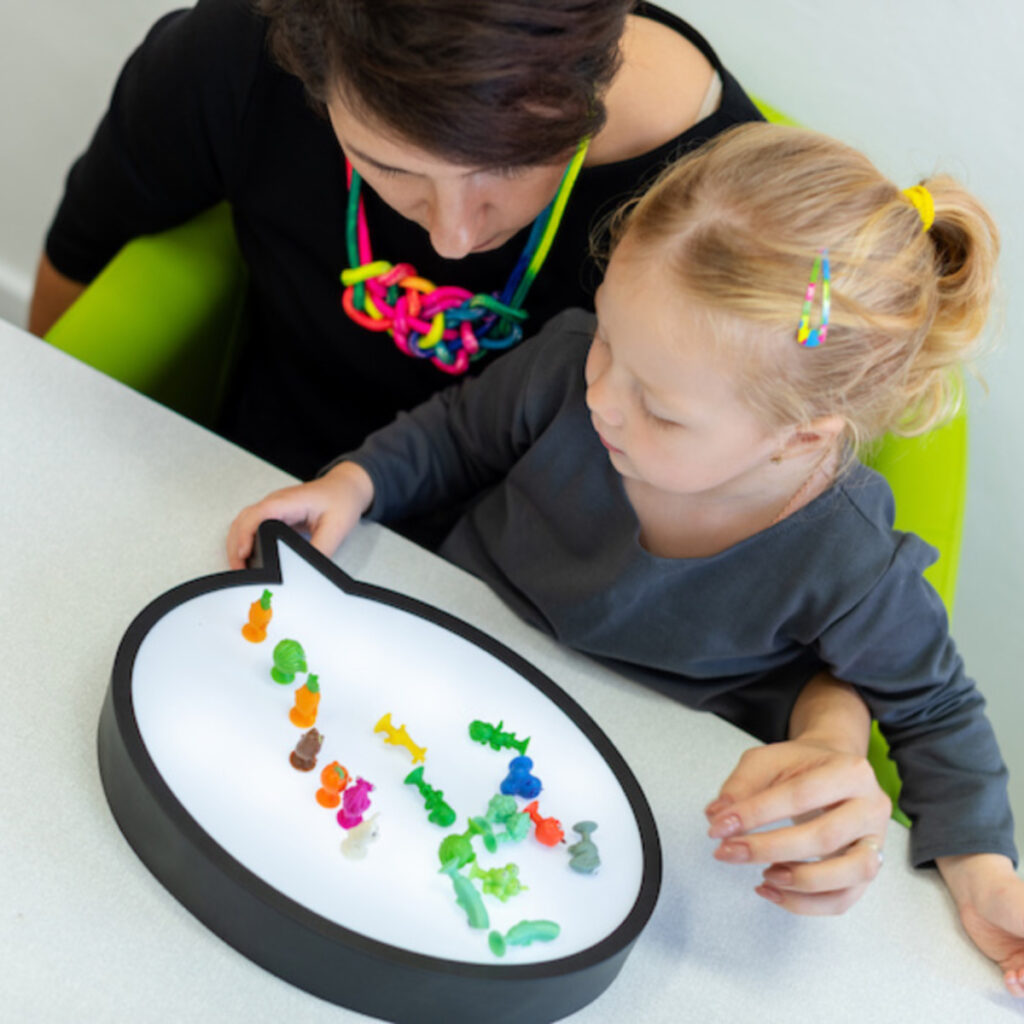
Your child works one-on-one with an occupational therapist through fun activities and games tailored to their goals. Sessions may focus on skills such as fine motor coordination, sensory processing, self-care, play, or self-regulation.
Guidance for parents
Your therapist will take time to share what your child is working on, celebrate their progress with you, and suggest simple ways to practice those skills during everyday routines at home.
Frequently Asked Questions
How often does my child need occupational therapy?
Your therapist recommends a schedule after the evaluation. Many children start with one or two sessions per week; the frequency may change as they make progress or when life transitions occur.
Can parents participate in OT sessions?
Yes, when it works well for your child. Some children benefit from having a parent in the room, while others engage better on their own. Either way, we keep you involved through regular communication, updates on your child’s progress, and practical activities to try at home.
Does my child need a diagnosis to receive OT?
No, your child does not need a diagnosis to come to us for an OT evaluation. If you’re concerned about their daily skills, an evaluation can help determine whether therapy would be helpful. Insurance requirements vary, and our team can help you check your coverage.
You’re in Good Company
What other Happy Familes have to say





Questions about how occupational therapy can help your child succeed?
Ask Amy

Amy O’Malley
Director Of Programming
How is Good Beginnings Pediatric Therapy Different from other Clinics?

1-on-1 Treatment Session
We do not use support staff or paraprofessionals. Your child is working directly with your therapist the entire session.

Helping families for over 34 years
Independently female owned and operated, we have been successful helping multiple generations of families.

Help Beyond Treatment Sessions
We support you at the treatment session and beyond. We collaborate with other team members, clinicians, and your school at your request.

100+ years of combined experience
Our therapists possess extensive training, experience, and longevity in the field. Our team includes both recent graduates with the latest knowledge and seasoned therapists with over 25+ years of experience.
Flexible Schedule and Billing Options
Our scheduling and billing teams are here to maximize your time with your therapist and guide you through the complexities of insurance. make everything easy so you can focus on your child.

Supporting the Community
We educate and empower the community beyond the clinic through free talks, professional training, and sharing our expertise on social media.
FAQ
Pediatric Occupational Therapy (OT) focuses on helping children develop the skills needed for daily activities, such as self-care, play, and school tasks. OTs work on fine motor skills, sensory processing, executive function abilities, self-regulation and social interactions to improve a child’s independence and participation in daily life. In contrast, Pediatric Physical Therapy (PT) primarily addresses gross motor skills, mobility, strength, and balance. PTs help children with movement challenges due to conditions such as injuries, developmental delays, or neurological disorders, aiming to improve their physical function and overall quality of life. While both disciplines aim to enhance children’s well-being, OT focuses on activities and participation, while PT emphasizes movement and physical function.
Choosing a pediatric practice vs. an adult practice for your child ensures access to specialized expertise tailored to children’s unique needs. With a child-friendly environment and staff trained to interact positively with young patients, Good Beginnings create a comfortable and reassuring atmosphere. We offer developmentally appropriate care, adapting treatment techniques to match each child’s age and stage of development. At Good Beginnings we prioritize family-centered care, involving parents and caregivers as partners in their child’s healthcare journey.
With each session, we also equip you customized knoweldge to take home to help it easier for you and your child. However, here are general tips that can help your child succeed better.
- Help prepare your child: Talk to your child about what to expect during OT sessions in a positive and reassuring manner. Let them know that the therapist is there to help them learn and grow.
- Choose the Right Time: Schedule OT sessions at times when your child is well-rested and alert, to maximize their engagement and participation.
- Create a Comfortable Environment: Ensure that your child feels comfortable and relaxed during OT sessions. Bring any comfort items that might help, such as a favorite toy or blanket.
- Offer Encouragement: Provide plenty of praise and encouragement during OT sessions to boost your child’s confidence and motivation. Celebrate their successes, no matter how small, and offer support when they encounter challenges.
- Stay Involved: Stay engaged and involved in your child’s therapy process. Ask questions, participate in activities when appropriate, and communicate openly with the therapist about your child’s progress and any concerns you may have.
- Practice at Home: Work on activities and exercises recommended by the therapist at home to reinforce skills learned during OT sessions. Make practice fun and incorporate it into daily routines whenever possible.
- Be Patient and Understanding: Be patient with your child and with the therapy process. Every child progresses at their own pace, and it’s important to celebrate their individual achievements along the way.
We develop individualized treatment plans based on the results of your evaluation; treatment frequency is typically 1-2x per week, and may decrease as treatment progresses. Treatment lasts as long as it takes to meet the goals or reach a plateau where therapy has been maximized. This varies depending on the diagnosis, age of the child, and any complicating factors.
Each Pediatric Occupational Session last approxiamtely 50 – 55 minutes.
We accept credit cards* (Visa, Mastercard, Discover, HSA Cards) and checks. Most families prefer to securely store their credit card on file for automated monthly payments. Online payments can be made through this link.
Payment by checks can be given directly to your therapist or mailed to PO Box 679 Smithsburg, MD 21783.
*Note, a 3% processing fee applies to all credit card payments.
We work with many insurances and have a Billing Department to assist. We can submit claims, provide bills, and assist you with maximizing your insurance coverage. Please contact us at 703.536.1817 to learn how we work with your insurance. We do not work with Medicaid at this time.